Contents
Origins: A Joke with Real Code
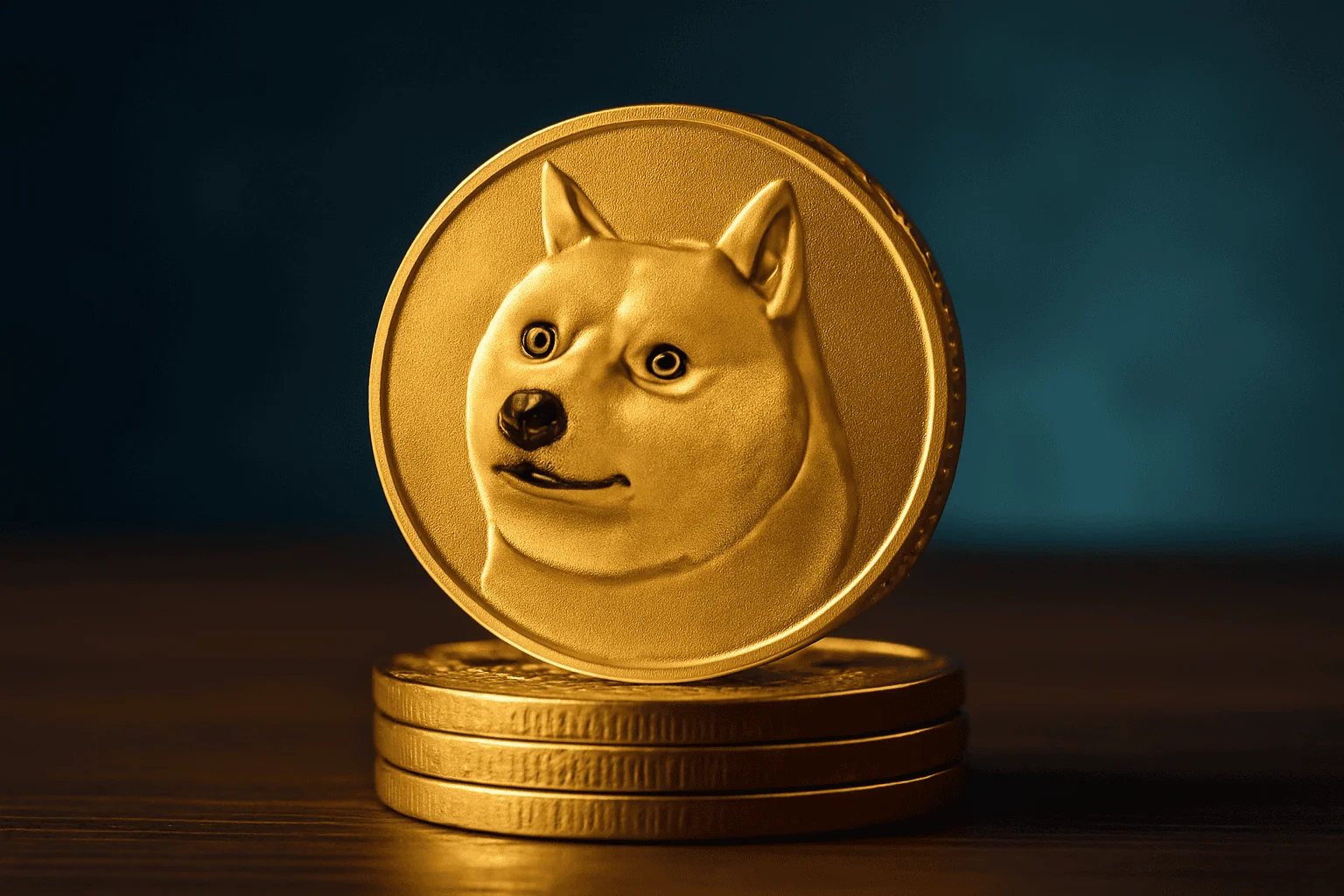
Dogecoin launched in December 2013, created by software engineers Billy Markus and Jackson Palmer. Inspired by the Shiba Inu “Doge” meme, they forked Litecoin’s codebase, itself a fork of Bitcoin. The point was lighthearted: make crypto feel fun and accessible, not just speculative or technical.
The joke caught fire. Tipping on Reddit and Twitter became Dogecoin’s first mainstream use case. People sent tiny amounts of DOGE to thank creators, support small causes, or boost morale. One micro-example: a user posts an insightful comment, another replies “+1” and tips 10 DOGE—fast, cheap, and public.
How Dogecoin Works Under the Hood
Dogecoin runs on its own blockchain using Proof of Work. Miners bundle transactions into blocks and secure the network by solving cryptographic puzzles. It’s not a copy-paste of Bitcoin: several parameters create a distinct feel.
- Block time: ~1 minute, making transactions confirm faster than Bitcoin’s 10 minutes.
- Consensus: Auxiliary (merged) mining with Litecoin, improving security and miner incentives.
- Supply: No hard cap; inflationary by design with a fixed block reward.
- Fees: Typically very low, which supports tipping and micro-transfers.
The core idea is simplicity: quick blocks, cheap fees, and a network secured partly by miners already supporting Litecoin. That shared mining has helped Dogecoin stay resilient despite price cycles.
Tokenomics: Inflation on Purpose
Dogecoin issues 10,000 DOGE per block. With roughly one block per minute, that’s about 14.4 million DOGE a day, or over 5 billion per year. There’s no maximum supply. This isn’t a bug; it’s policy. The fixed issuance leads to a declining inflation rate over time as total supply grows.
Why design it this way? Two reasons: to keep transaction fees low by rewarding miners with block rewards, and to discourage hoarding by making Dogecoin more like a currency than a scarce store of value. The trade-off is clear: predictably low fees and active circulation, balanced against long-term dilution for holders.
What People Actually Use DOGE For
Dogecoin’s utility today is modest, but real. It clusters around small, fast payments within communities and occasional merchant acceptance.
- Tipping and micro-donations: Forums, X (Twitter), and community drives still use DOGE for quick thank-yous.
- Payments: A subset of merchants and payment processors accept DOGE for goods, gift cards, and services.
- Transfers: Moving value between exchanges or friends at low cost, especially when networks like Bitcoin are congested.
- Fundraisers: From sponsoring athletes to charity initiatives, DOGE has a track record of viral campaigns.
Example scenario: a small indie game developer posts a free patch. Fans tip a few hundred DOGE across comments. The developer swaps DOGE to stablecoins on an exchange to cover server fees—quick in, quick out, minimal friction.
Community and Culture: The Real Engine
Dogecoin thrives on culture: memes, jokes, and a disarmingly friendly tone. That vibe pulled in casual users who found Bitcoin’s seriousness intimidating. Celebrities and high-profile figures occasionally amplify sentiments, which can spike interest and price volatility.
The community’s ethos—fun, generosity, and accessibility—has real effects. It keeps the network visible in mainstream conversations, sustains tipping behavior, and draws in new users who might never read a whitepaper.
Dogecoin vs. Bitcoin and Litecoin
Dogecoin often gets compared to its older relatives. The differences matter for expectations and use cases.
| Feature | Dogecoin | Bitcoin | Litecoin |
|---|---|---|---|
| Consensus | Proof of Work (Scrypt, merged with LTC) | Proof of Work (SHA-256) | Proof of Work (Scrypt) |
| Block Time | ~1 minute | ~10 minutes | ~2.5 minutes |
| Supply Model | Inflationary (no cap) | Fixed cap (21 million) | Fixed cap (84 million) |
| Typical Use | Tipping, micro-payments | Store of value, settlement | Payments, testbed for upgrades |
| Fee Profile | Low | Variable, can spike | Low |
In short: Bitcoin prioritizes scarcity and security; Litecoin aims for faster payments; Dogecoin doubles down on accessibility and culture with rapid, cheap transactions.
Risks: Volatility, Hype, and Tech Limits
Dogecoin’s open, meme-driven identity cuts both ways. Sudden price moves can follow social media waves, which can outpace fundamentals. Liquidity is broad on major exchanges, but spreads still widen in frantic markets.
- Speculation risk: Sentiment can whipsaw price in hours.
- Inflation: Long-term holders are diluted by fixed issuance.
- Development cadence: Core upgrades arrive, but not at the pace of ecosystems with large foundations.
- Security assumptions: Merged mining helps, yet economic security still depends on miner incentives and LTC’s health.
- Regulatory uncertainty: Classification and compliance rules continue to evolve by jurisdiction.
Practical takeaway: treat DOGE like a high-beta internet-native currency. It can be handy for movement and community uses, but it isn’t engineered for hard-capped scarcity.
How to Get and Store Dogecoin
Access is straightforward. Most major centralized exchanges list DOGE with fiat pairs. Decentralized venues exist on certain networks via wrapped versions, but the simplest route is a reputable exchange plus self-custody if you plan to hold.
- Choose a platform: pick an exchange with strong security, DOGE liquidity, and clear withdrawal policies.
- Fund your account: bank transfer, card, or crypto deposit.
- Buy DOGE: use a market or limit order; consider fees and spreads.
- Withdraw to a wallet: for custody, use the official Dogecoin wallet or a multi-coin wallet that supports native DOGE.
- Back up and verify: store seed phrases offline and test a small send first.
Hardware wallets support DOGE via integrated apps or third-party tools. On mobile, lightweight wallets are fine for tipping and small balances. For larger amounts, cold storage and careful key management beat convenience.
Fees, Speed, and Practical Limits
Dogecoin is fast for everyday transfers. One-minute blocks mean a first confirmation arrives quickly, and many small merchants accept zero or one confirmation for low-value transactions. Fees are usually a fraction of a cent, though they can rise with congestion.
There are limits. Finality still depends on confirmations; for high-value transfers, waiting 20–40 minutes improves safety. Network capacity is finite, so during hype surges, mempools expand and delays occur. Even then, DOGE’s cost profile tends to remain attractive compared to pricier chains.
Development and Ecosystem Notes
The Dogecoin Core client maintains compatibility and steady improvements—fee policy tweaks, security patches, and networking updates. Tooling has expanded: payment gateways, tipping bots, and merchant plugins make DOGE practical without custom code.
Smart contracts aren’t native to Dogecoin. Some projects experiment with bridges and wrapped assets to bring DOGE into contract platforms, but that introduces custodial or bridge risk. If you need programmable logic, you’ll typically operate on another chain while using DOGE primarily as the asset moved in and out.
Why Dogecoin Still Matters
Dogecoin changed the tenor of crypto adoption. It invited newcomers with humor and stripped-down utility, making small digital payments feel approachable. Behind the memes sits a stable, simple chain that’s survived multiple market cycles.
If you want a lightweight internet currency for tipping, fandom projects, or low-stakes payments, DOGE fits neatly. If you want capped supply, advanced programmability, or institutional-grade settlement, look elsewhere. Knowing that distinction helps you use Dogecoin for what it does best—and ignore the noise when the memes get loud.